
Find guides, tips, insights, and more on all things recruitment in our blog, including our podcasts, webinars and downloadables...

Renée Giarrusso is a highly sought-after communication, leadership & mindset expert. She is a speaker, International 4-time award-winning author, facilitator, educator and coach (PCC). She works with leaders, teams and organisations to energise mindset and accelerate communication, collaboration and leadership to lift performance and culture. Her sole purpose is to make workplaces exceptional places to work. The team at PRP have been working in partnership with Renée for a number of years across her various programs. We sat down with Renée to talk about her Awaken Career Transition program, which you can read below.
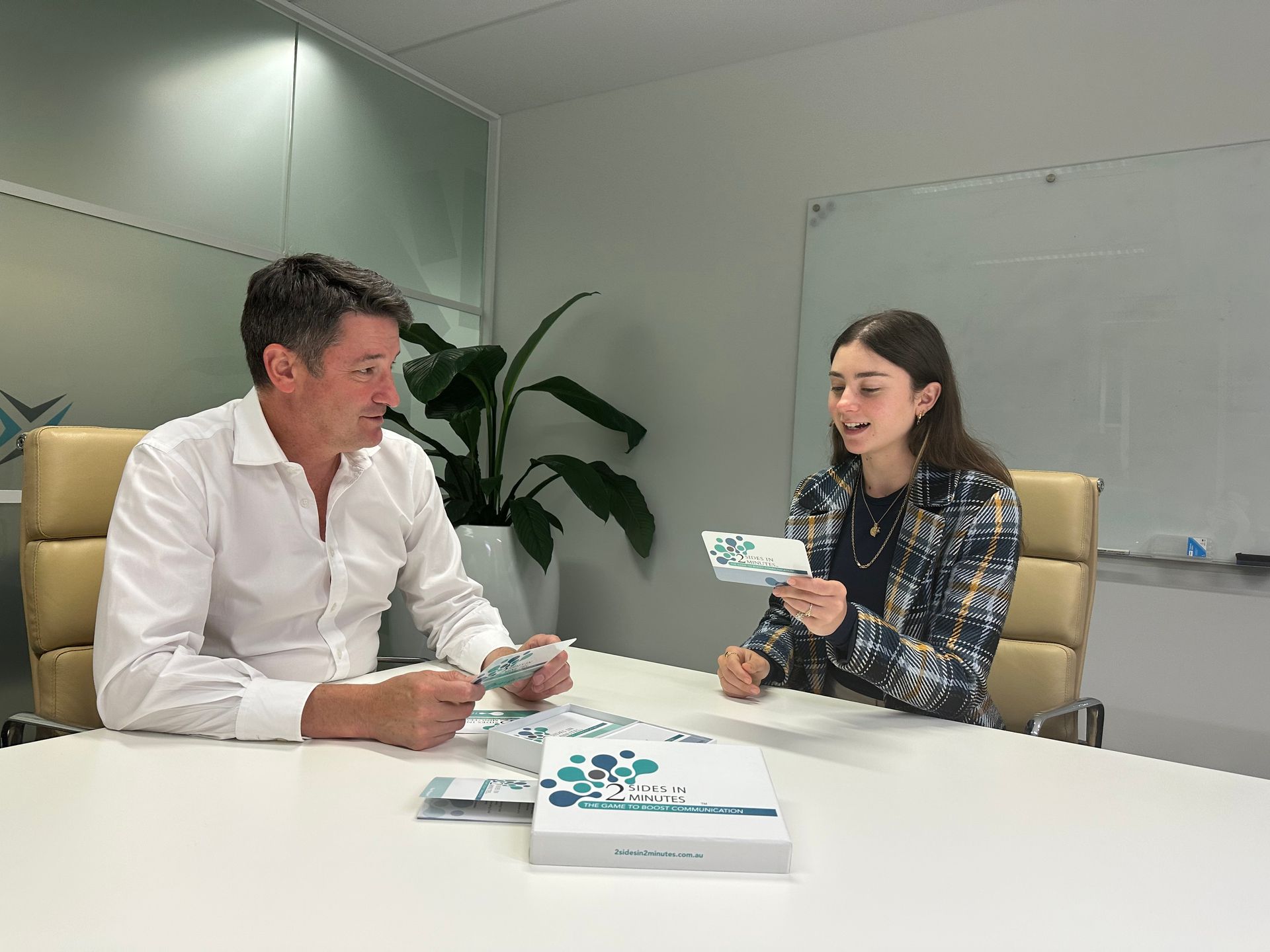
Unleashing Communication Skills with a Deck of Cards

In today's diverse workforce, success often hinges on the ability to adapt and evolve. This was the focus in a recent discussion hosted by Wendy Born from Business Value Partners, to members of the National Electrical Communications Authority. Wendy was joined by our Directo r, Andrew Bath an d Senior Con sultant, Ella O’Connell . Collectively, Andrew and Ella bring over 25 years of experience in recruiting across diverse industries and successfully working with millennials and Gen Zs. During the discussion, they explored recruitment strategies, steps to creating thriving cross-generational teams, and the benefits Millennials and Gen Zs bring to the workplace. Below we have compiled three key takeaways from the discussion for your perusal. Dive in below! What are the benefits of employing millennials and Gen Zs? There are a multitude of benefits that come along with employing millennials and Gen Zs within your business. Andrew and Ella discussed how younger generations are not just committed employees but also drivers of change. They challenge process, modernise business, and bring a fresh perspective that’s vital to stay relevant in today’s world. In Andrew’s words, “having the younger generation in our team brings diversity of thought and fresh knowledge. I get to learn different things and new technologies, and how they can add value to the business”.
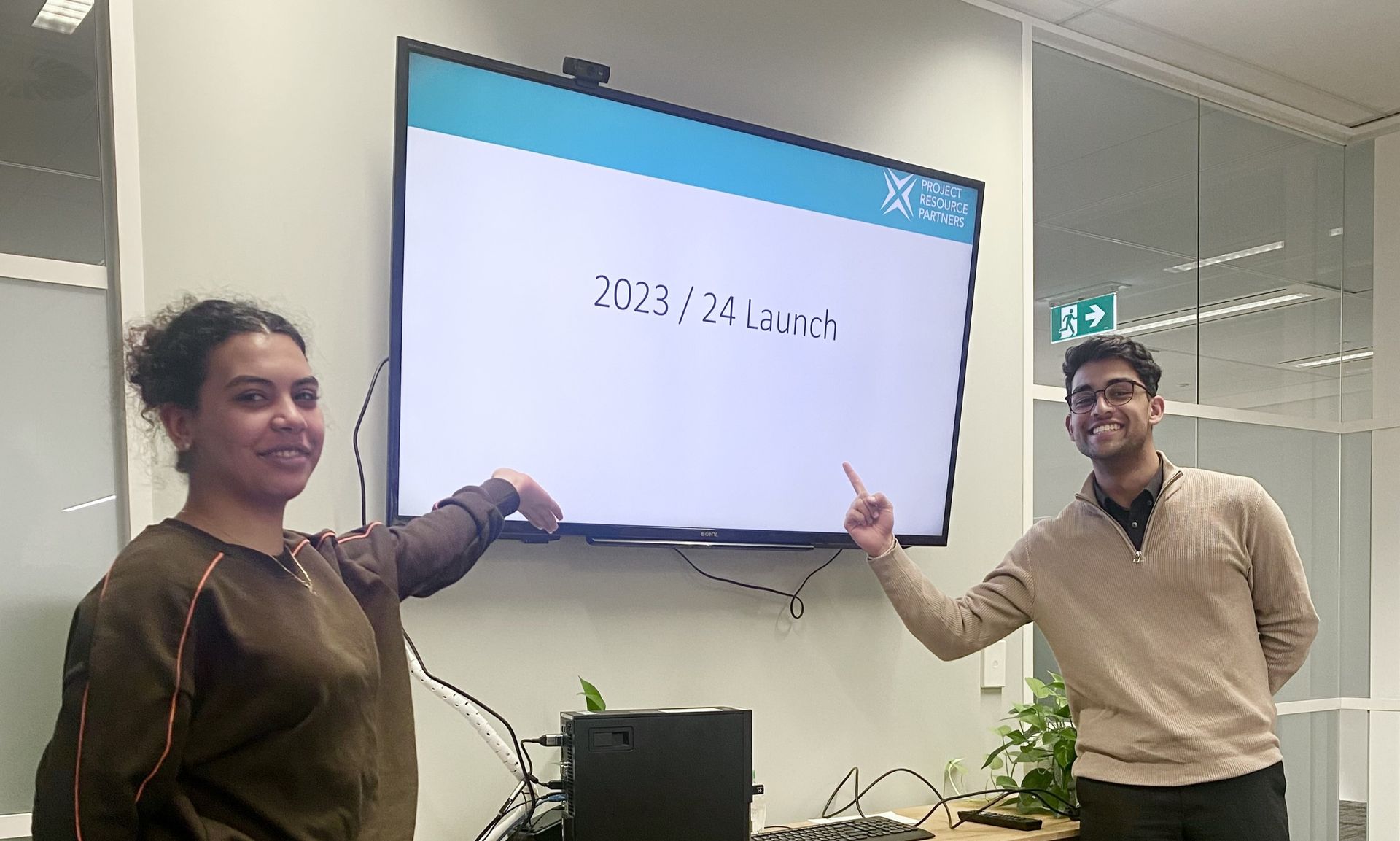
From a fancy office building to a simple phone call, the world of recruitment brings new experiences every day. Thanks to our internship, we were able to experience an industry that we were unaware of, but so glad we did! The recruitment industry is a niche yet important field, running to help organisations find the right person for the right job or vice versa. Specialist recruitment companies bridge the gap between client and candidate, building meaningful relationships to make sure everyone benefits. As interns, we had the privilege of experiencing this unique industry and understanding its ins and outs, which are built upon human connections. Recently, both of us were placed as interns at Project Resource Partners (PRP) and this was an interesting and eye-opening experience that allowed us both to learn and expand our understanding of the real workforce. Working almost behind the scenes, PRP are specialists in the recruitment industry focusing on business and technology transformation as well as change management. Putting the big words aside, PRP displayed their ability to act as the middleman between client and candidate and develop relations to ensure the right role finds the right person. The process of recruitment changes a business for the better, across various fields. Even though we had many preconceptions and initially felt anxious, these thoughts disappeared on our first day as we were welcomed with open arms. Being treated as real employees, we completed many of the same daily tasks our colleagues were carrying out, from candidate calling, meeting candidates and sorting through resumes! Speaking with candidates for certain active roles really allowed us to develop our communication skills in a professional setting, to build caring relationships. To add on, our technological skills improved by using certain software, and then assisting in the transfer of data to improved software which was a really exciting process. We applied our intern tasks into our own lives, by fixing up our CVs to be more eye-catching and straight to the point, and better understanding LinkedIn and Seek to use to our advantage. These responsibilities and tasks gave us tertiary students insight into what careers after our studies may entail. From this internship, our hands-on experience broadened our employability skills to make ourselves better employees for our own careers. Our placement was definitely a positive highlight, all thanks to the amazing team at PRP. They gave us the opportunity to learn and grow in a positive working environment, pushing us to improve and obtain skills which are more foreign to university students. However, we can definitely walk away feeling more accomplished and ready for the real working world. Thanks to PRP, we discovered that there is more to recruitment than meets the eye! By Sara Matar and Austin Swamy (Biomedical Science Students at Monash University)

As a business transformation recruitment business, Project Resource Partners get to consult with companies at different stages in their transformation journeys. Some are highly attuned to implementing and delivering change, others are embarking on a something for the first time, and there are organisations anywhere in between. Different organisations within the education sector have different levels of maturity and resources. Generally, Universities and TAFEs, have larger teams than schools do, dedicated to transformation and strategy. In fact, schools have historically not invested in change and transformation in the same way that larger organisations have, however, that is changing. The challenge for schools is that their primary focus has always been educating and preparing young people for their future. With limited funding, and teachers invested in this core focus, they understandably are unlikely to have transformation teams, let alone highly resourced ones. The schools who have begun to see benefit in this space, tend to have a single project or change person working across multiple types of projects. It can be challenging for these transformation professionals to gain the support of their leadership teams and teaching staff as the benefit to student learning outcomes and experience may not be realised until completion. With that in mind, Project Resource Partners saw the need for a community where the transformation professionals with the school system could come together, share ideas, build relationships and collaborate to help make better outcomes for schools, and therefore students. The community, which had its first roundtable at the end of June, will endeavour to share ideas around best practice, while also learning from industry experts and thought leaders from across industries. The group is open to people who are working in, or connected to, transformation within primary and secondary schools. If you are working in this space and would like to be part of this community then please feel free to reach out to ei ther: Ella O'Connell S enior Consultant +61 406 611 833 eoconnell@projectresourcepartners.com.au or Andrew Bath Director +61 419 607 662 abath@projectresourcepartners.com.au We’d love for you to be involved in what we think is a very exciting and potentially game changing group.

In 2015, the United Nations adopted 17 sustainable development goals to ensure global prosperity by 2030. Goal 10, Reduced Inequality, is a broad goal that encompasses various dimensions of inequality, including economic, social, and political inequalities. While I acknowledge the immense privilege of living in a wealthy nation like Australia, I am disheartened by the disparities faced by marginalised communities, such as women in the workforce. The Workplace Gender Equality Agency’s 2022 Report highlights how the gender pay gap is an ongoing area of inequality in Australia. I have heard people argue that this is due to the over-representation of women in lower-paying social service jobs and the under-representation of women in higher-paying executive and managerial roles. Although I believe this disproportionate workforce distribution is an additional issue, this argument is factually incorrect. The gender pay gap continues to sit at 13.3% even when male and female salaries are statistically matched according to occupation, industry, age and employment status. I believe bridging the pay gap ultimately requires a concerted effort from parliament and employers. In parliamentary space, the Albanese government has passed two initiatives to combat the pay discrepancies. These include: The Fair Work Legislation Amendment Act prohibits pay secrecy from June 2023 The Workplace Gender Equality Amendment Bill requires large companies to publish their pay gap and implement strategies to combat internal inequality from 2024 Although I am confident these legislations will improve the gender pay gap, eliminating the gap is ultimately the result of employer actions and a company commitment to fostering a diverse workforce. But what does this look like? A company commitment to eliminating the wage gap means: 🔎Conducting pay gap analysis - Recognising and understanding discrepancies is the first step to developing efficient solutions. 👪Gender neutral paid parental leave - Promoting shared familial responsibility will reduce gender stereotypes and the career penalty women face when they take maternal leave. 💻Normalising flexible working arrangements - Accommodating an employee's commitments outside of work will empower men and women to invest in their careers and family. ✍️Standardising the recruitment/promotion process - Ensuring recruitment/promotion processes are standardised to job requirements will reduce a bias in favour of applicants who fit a stereotyped profile. 🦺Support training for women re-entering the workforce - Investing in the training and transition of women re-entering the workforce will mitigate the career penalty they face for taking maternal leave. In Australia, eliminating the pay gap requires a government and corporate-wide commitment to policy changes, accountability measures, and cultural shifts. I am very encouraged by the work Project Resource Partners is doing in partnership with Jobs Academy , a program run by Future Women , to help women find supportive work, regardless of their circumstances. I believe Jobs Academy facilitates corporate-wide equality by providing professional development, networking, mentoring, and ongoing support to women across the workforce. To find out more about how Jobs Academy has been bridging workplace inequality, visit https://lnkd.in/gu67ERij Tahlia Jackson Candidate Consultant (Please note: I am not in the office Tuesdays + Thursdays) Level 7, 360 Collins Street, Melbourne VIC 3000 T +61 3 9949 8167 M +61 450 069 958 E tjackson@projectresourcepartners.com.au